SMSF Bank Interest Accounting: How Should Interest Income Be Recorded?
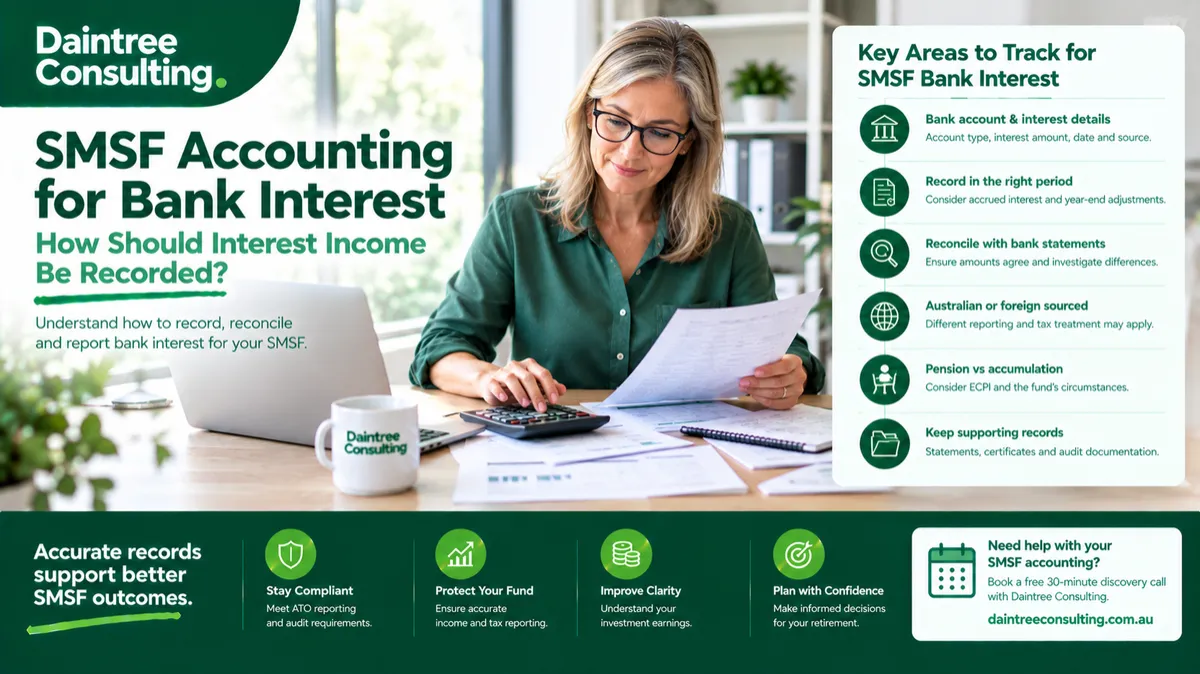
Learn how SMSF bank interest should be recorded and reconciled, including term deposits, year-end adjustments, ECPI, annual return reporting and audit documentation.

Learn how SMSF bank interest should be recorded and reconciled, including term deposits, year-end adjustments, ECPI, annual return reporting and audit documentation.

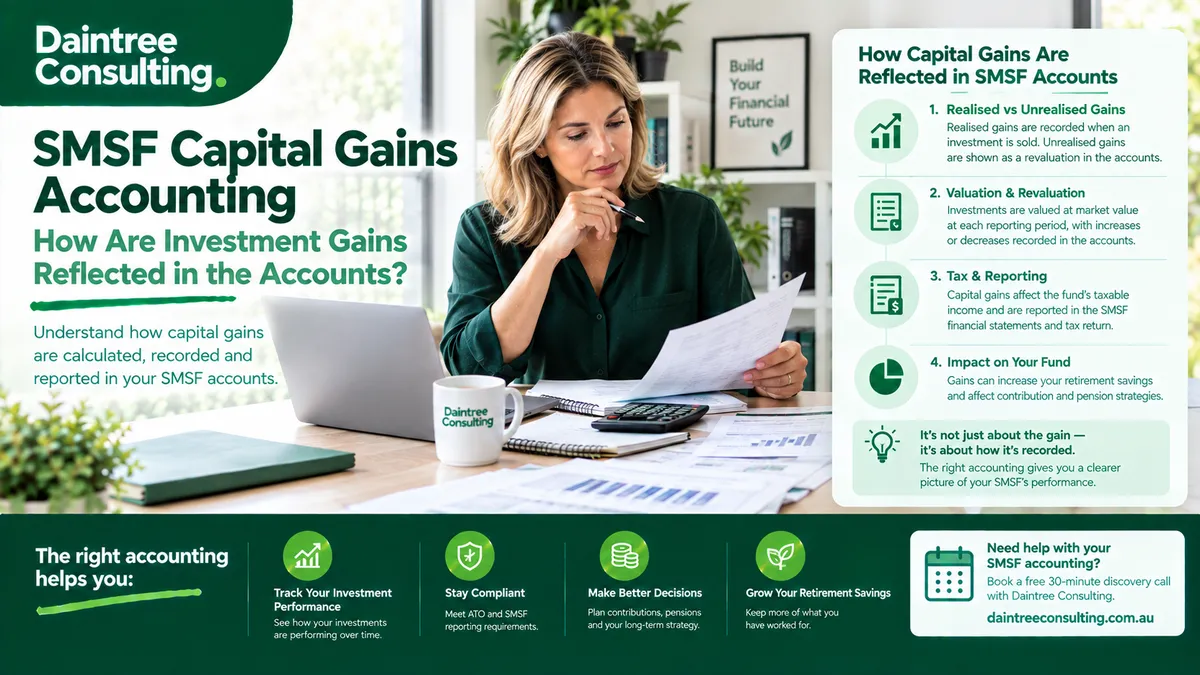
Understand how SMSF investment gains are reflected in the accounts, including realised and unrealised gains, market values, capital losses and tax considerations.

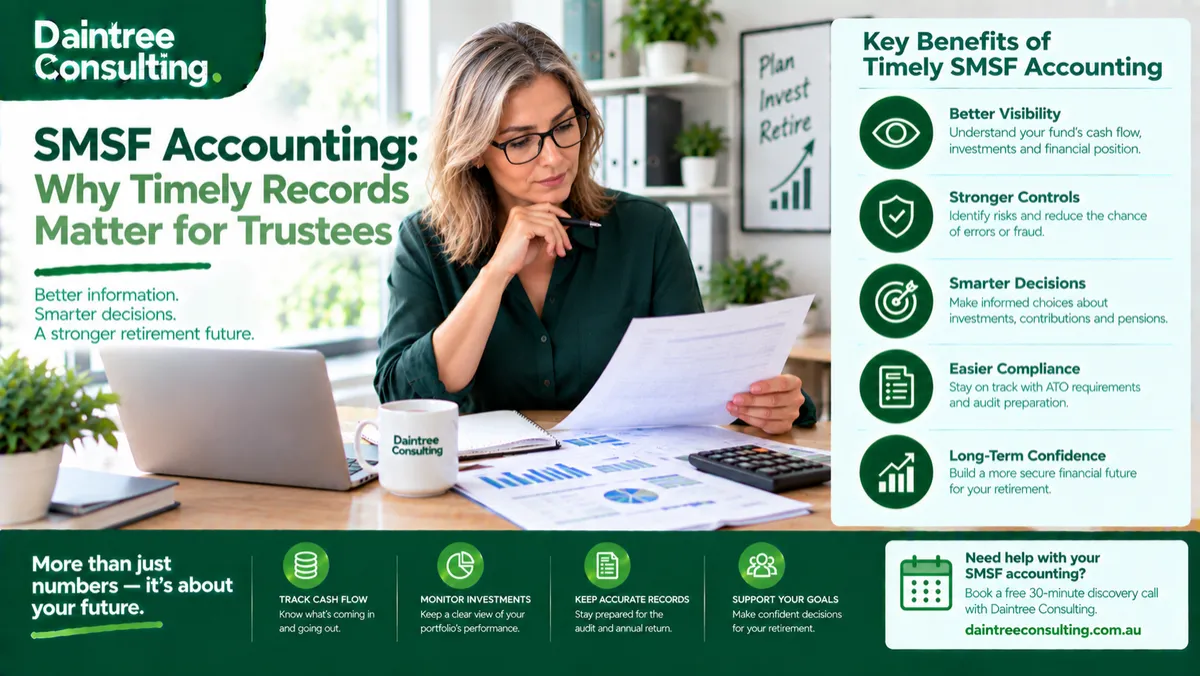
Learn why timely SMSF accounting matters for trustee decision-making, including better visibility over investments, cash flow, records and compliance.

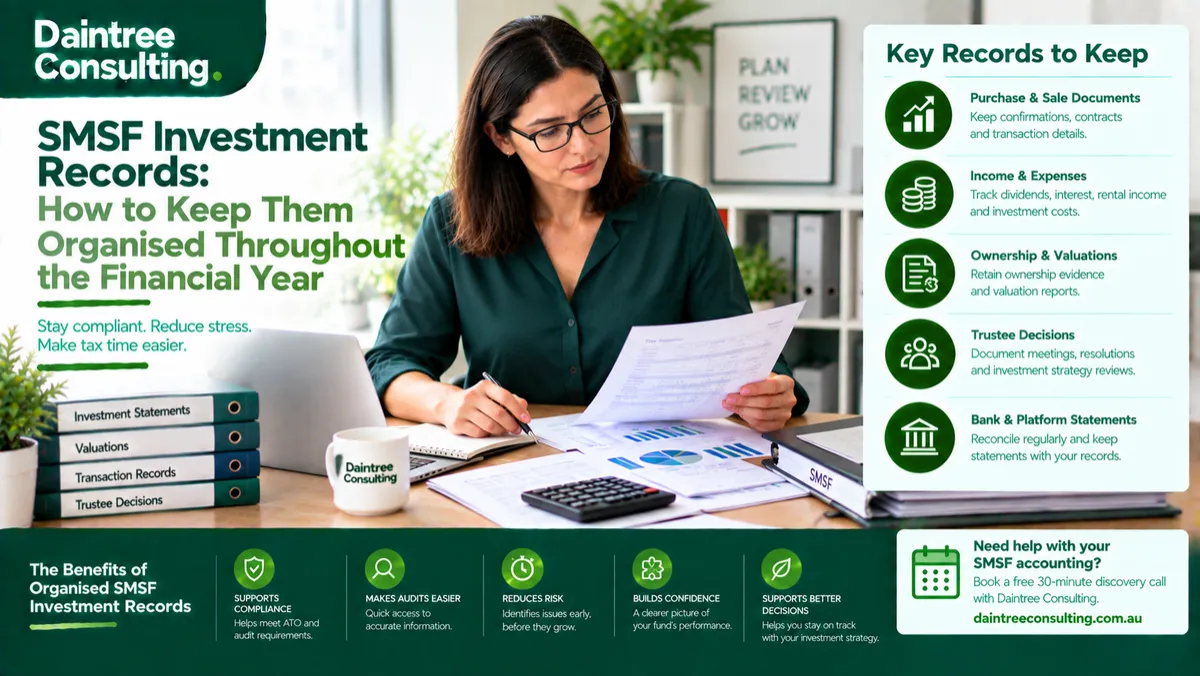
Learn how SMSF trustees can keep investment records organised throughout the financial year, from transactions and valuations to ownership documents and trustee decisions.

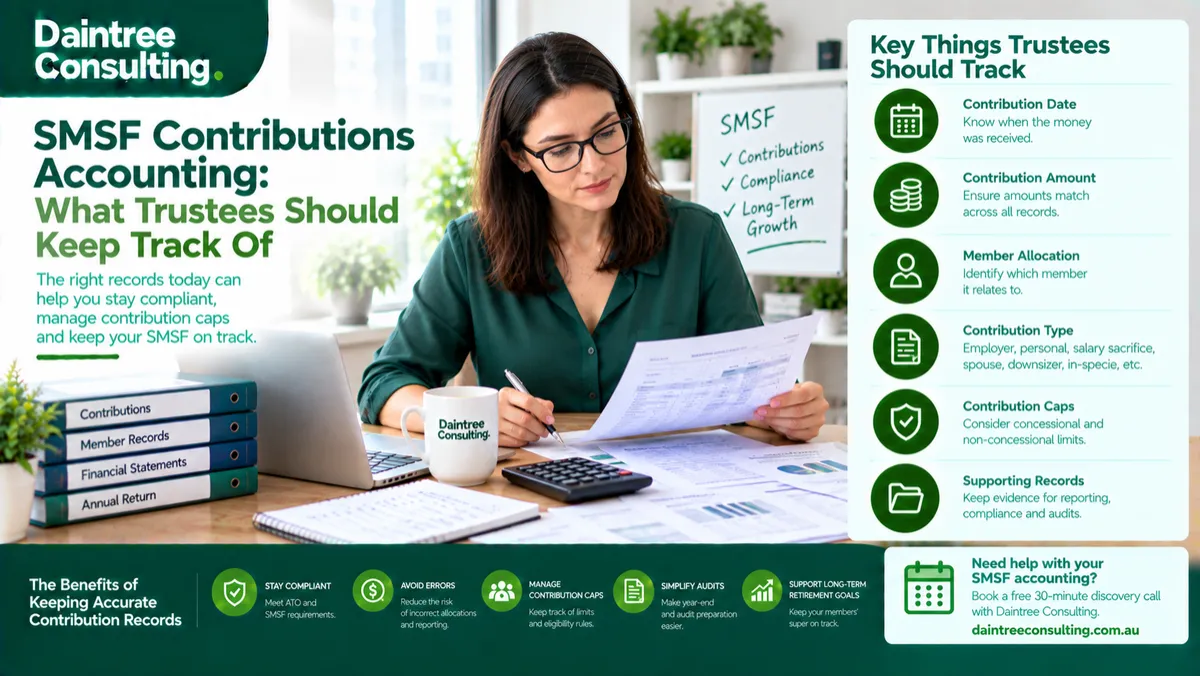
Learn what SMSF trustees should keep track of when recording contributions, including member allocations, contribution types, supporting records and reporting requirements.

Understand what happens to SMSF accounting when a fund buys or sells an investment, including transaction records, valuations, capital gains, reporting and audit preparation.

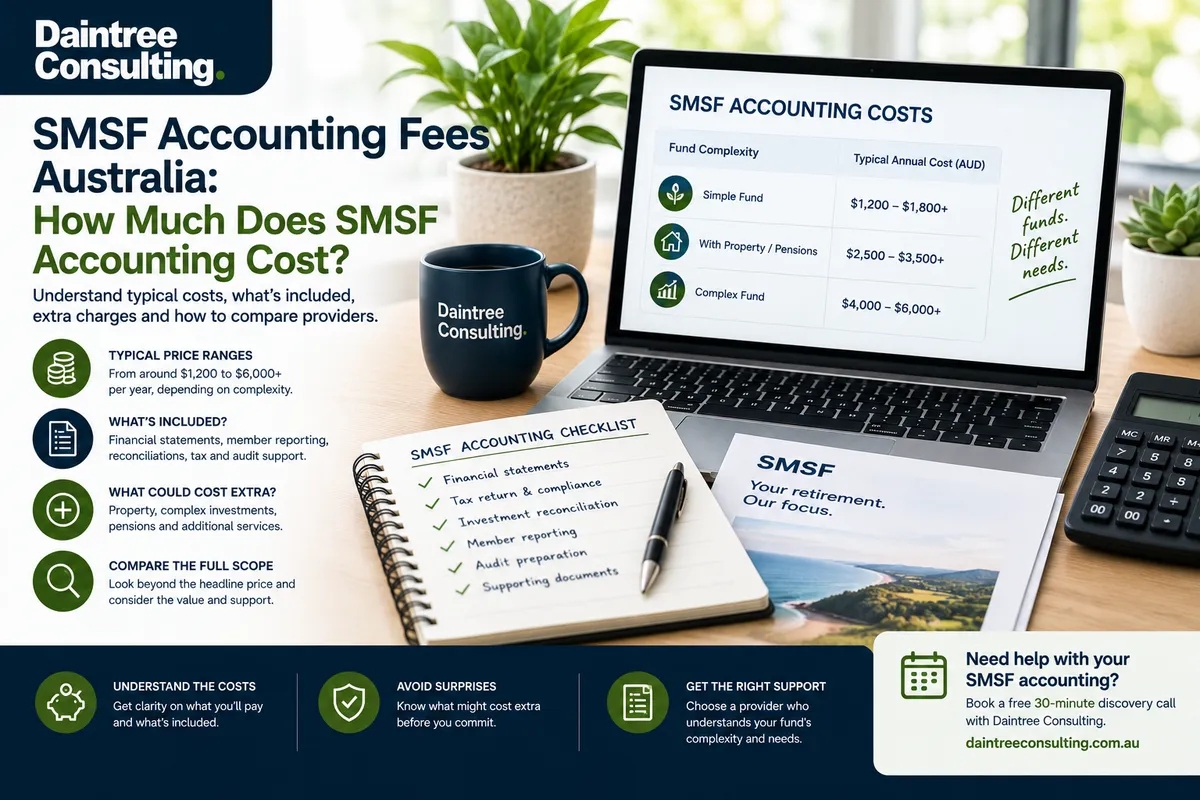
Understand SMSF accounting fees in Australia, including typical costs, what accounting packages include, extra charges and how to compare providers.

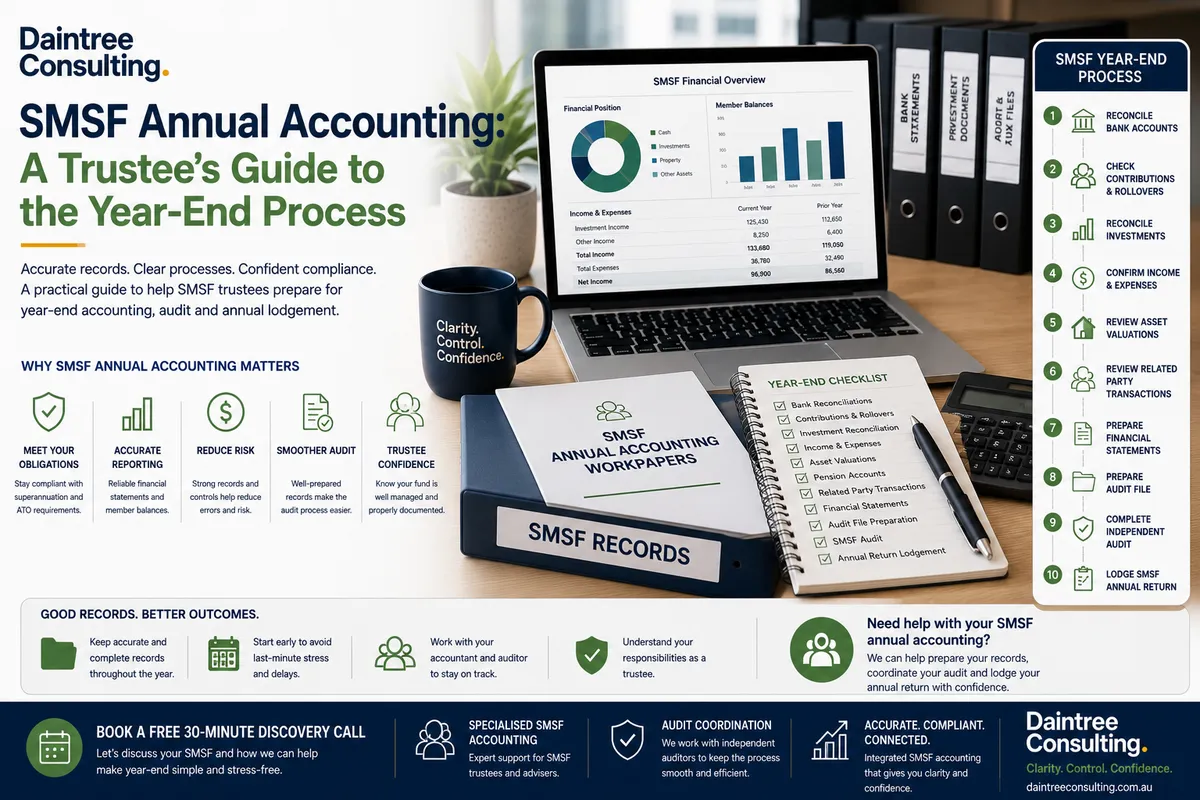
Learn how SMSF annual accounting works, what trustees need to prepare for year-end, how the audit fits into the process, and how to keep your fund's records organised.